Smart Outdoor Lighting Choices That Transform Your Yard After Dark | Checkout NOW
There’s something magical about stepping into your yard at night when it’s properly lit. A well-planned lighting setup turns an ordinary backyard into an inviting extension of your home—perfect for evening dinners, relaxing with a book, or just enjoying the fresh air after sunset. I learned this the hard way after years of struggling with harsh floodlights and dim solar lights that died after one season. Once I upgraded to thoughtful outdoor lighting, our yard became a space we actually use and enjoy every single evening.
Choosing the right outdoor lights isn’t just about brightness. It’s about creating layers, safety, mood, and practicality that fit your lifestyle and yard layout. Here’s what actually works in real homes.
Start With Purpose: What Do You Want Your Lighting to Do?
Every yard is different. Some people need bright security lighting near entrances and driveways. Others want soft, romantic glow for patios and gardens. Many want both—functional light where needed and beautiful accent lighting elsewhere.
Think about your routines. Do you entertain often? Have kids or pets that play outside? Want to highlight specific trees, pathways, or water features? Your answers will guide every decision.
Key Types of Outdoor Lighting
Pathway and Step Lights These guide people safely through your yard. Low-level lights along walkways prevent trips and look elegant. Solar versions are easy to install, but hardwired ones give more reliable brightness.
Spotlights and Uplights Perfect for highlighting trees, architectural features, or garden statues. Uplighting creates dramatic shadows and depth. Adjustable fixtures let you change the angle as plants grow.
Wall and Post Lights Great for porches, decks, and entry points. They provide general illumination while adding style. Look for ones with motion sensors to save energy and add security.
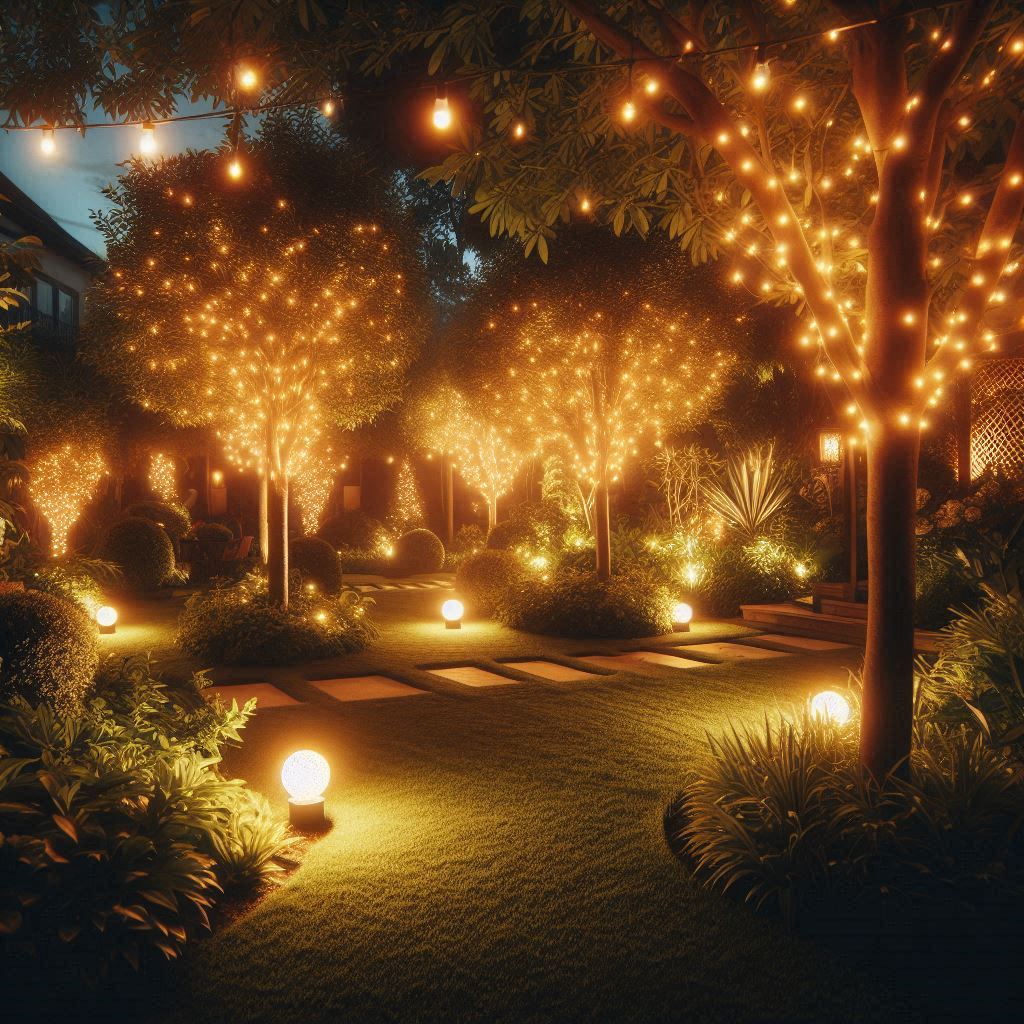
String Lights and Festoon Lights These create instant atmosphere. Drape them over patios, between trees, or along fences. Weatherproof LED versions last for years and use very little electricity.
Floodlights and Security Lights Essential for larger yards or safety. Modern LED floodlights with motion detection are far better than old halogen ones—they’re brighter, cooler, and more energy-efficient.
Deck and Rail Lights Subtle lighting built into or under deck railings makes evening gatherings safer and more beautiful.
Important Features to Consider
Brightness and Color Temperature Warm white (2700K–3000K) feels cozy and inviting for entertaining areas. Cooler white works better for task or security lighting. Dimmable options give you flexibility throughout the night.
Durability and Weather Resistance Look for IP65 or higher ratings. Fixtures should handle rain, snow, heat, and freezing temperatures. Solid brass, copper, or high-quality aluminum last longest.
Power Source
- Solar: Easy installation, no wiring needed. Great for pathways and accents, but performance drops in shady or cloudy areas.
- Low-Voltage Wired: Reliable and bright. Requires some installation but gives consistent performance.
- Hardwired: Best for permanent, high-use areas but needs professional help.
- Battery: Good for temporary or hard-to-reach spots.
Smart Features Many modern systems connect to apps or voice assistants. Timers, motion sensors, and scheduling save energy and add convenience. You can turn lights on before you get home or dim them from your couch.
Energy Efficiency LED bulbs use a fraction of the power of old incandescent ones and last much longer. This matters when lights stay on for several hours every night.
Planning Your Layout Effectively
Layer your lighting: ambient (general area), task (grills, tables), accent (plants, features), and safety (steps, paths).
Avoid light pollution—point lights downward or use shielded fixtures so you can still see the stars. Create zones rather than lighting everything uniformly. A softly lit seating area feels more intimate than blasting the whole yard.
Consider your neighbors. Bright lights shining into their windows can cause tension. Shielded, downward-facing lights solve this nicely.
Installation Tips and Common Mistakes
Start small. Test a few lights in key areas before committing to a full system. Use outdoor-rated extension cords or proper wiring for safety.
Common mistakes to avoid:
- Buying everything too bright (it creates glare and wastes energy)
- Placing all lights at the same height
- Ignoring maintenance (clean fixtures regularly so dirt doesn’t dim them)
- Choosing purely decorative lights for high-traffic safety areas
Seasonal and Long-Term Considerations
Good lighting works year-round. In winter, it makes snowy evenings beautiful and safe. In summer, it extends your outdoor living time.
Plan for growth—plants get bigger, so choose flexible fixtures. Quality lights can last 10+ years with proper care, making them worth the initial investment.
Bringing It All Together
The best outdoor lighting feels natural, not like a stadium or a dark cave. It should welcome you home, keep your family safe, and create beautiful spaces for making memories.
Take time to walk your yard at night with a flashlight. Notice dark spots, tripping hazards, and areas you wish were highlighted. Those observations will lead you to the right combination of lights.
When done thoughtfully, proper outdoor lighting increases your property’s value, improves safety, and turns your yard into a true sanctuary after sunset. You’ll wonder how you ever spent evenings inside when the backyard is calling.
Many families say their outdoor lighting was one of the best home upgrades they ever made—not because it was expensive, but because it changed how they actually lived in and enjoyed their space every single day and night.
Ready to light up your yard? Start with purpose, choose quality that lasts, and build layers that work together. Your future evening self will thank you.